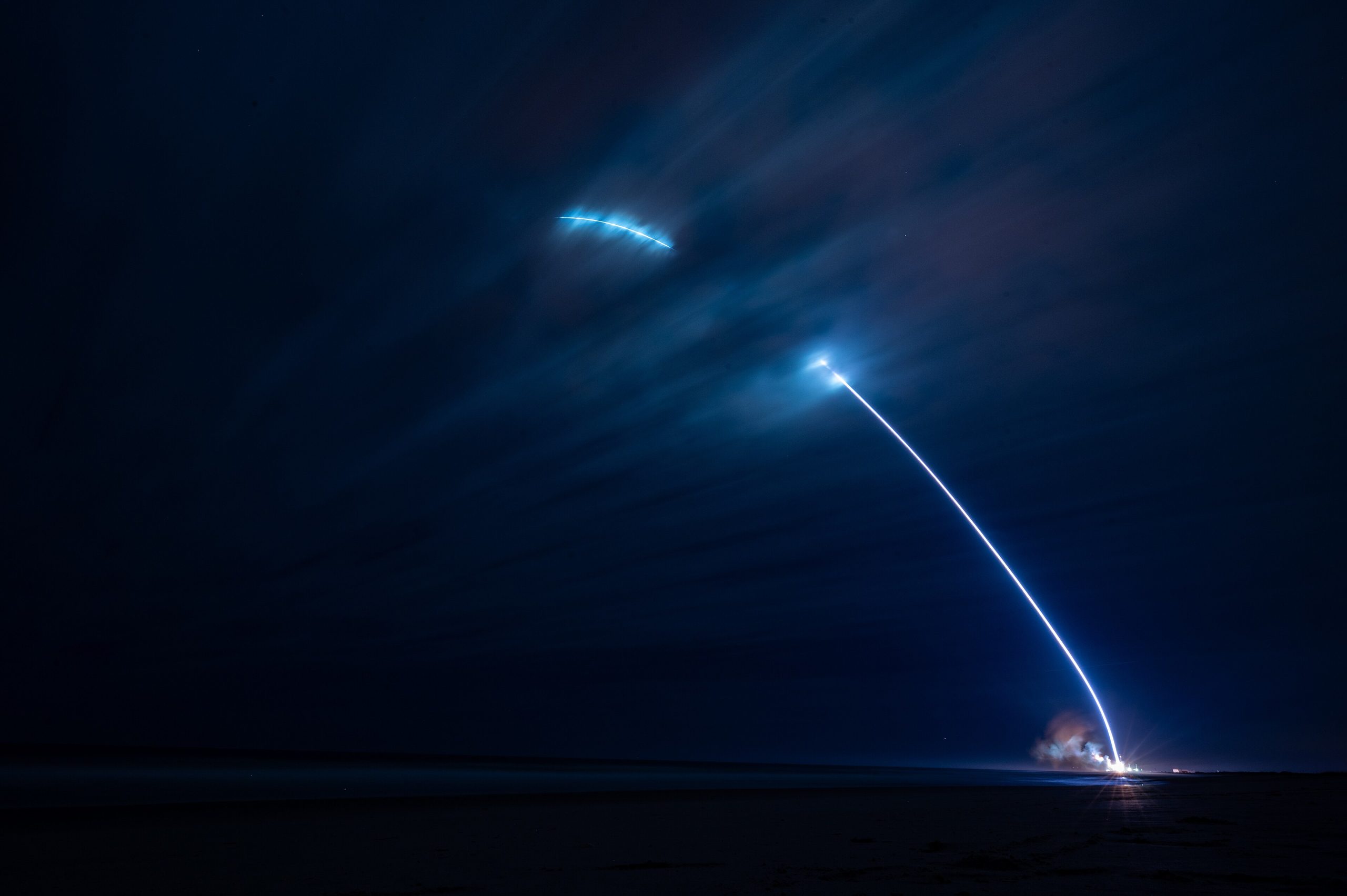
Brevard County’s space industry is growing in ways that go well beyond what residents see on launch day. SpaceX is developing infrastructure for a larger Florida role. Blue Origin has built a manufacturing and launch presence around New Glenn and is adding facilities. Farther south, Melbourne-area businesses work on satellites, secure communications, ground systems, and the equipment that makes space missions useful.
That combination matters to people living in Melbourne, Eau Gallie, West Melbourne, and the Lake Washington area. The county’s space identity is also an everyday business story: engineering offices, production facilities, technical services, and work that continues between launches.
Here is a look at the growth, the local companies involved in the wider industry, and what newcomers should understand about the geography.
Research updated October 5, 2026. Project plans and launch schedules can change. The sections below distinguish operating facilities, completed investments, and projects still being developed.
Key takeaways
- SpaceX operates Falcon launches from LC-39A and SLC-40 and is building Starship infrastructure; Starship launches still require further FAA licensing.
- Blue Origin builds New Glenn in Exploration Park, launches from LC-36, and announced the LC-36B expansion in August 2026.
- Melbourne’s role includes satellites, secure communications, and ground systems at companies such as L3Harris, Aeronix, and TSS Solutions.
- Confirm the worksite: Melbourne offices and Cape launch facilities are very different commutes.
A space economy that reaches beyond Cape Canaveral
The launch sites in northern Brevard are the most visible part of the industry, but a launch is only one stage of a mission. Spacecraft must be built, tested, controlled, and connected to systems on the ground. Data must be received, processed, and protected.
That helps explain why businesses farther south belong in the same regional story. A Melbourne-based company can contribute to the space economy without manufacturing a rocket or operating a launch pad.
It also means that “working on the Space Coast” can describe very different locations and jobs. Cape Canaveral Space Force Station, Kennedy Space Center, Melbourne, West Melbourne, and Palm Bay are not interchangeable work destinations.
SpaceX: established Florida operations and a larger infrastructure plan
SpaceX’s Florida presence includes Falcon launch operations at Kennedy Space Center’s Launch Complex 39A and Cape Canaveral Space Force Station’s Space Launch Complex 40. Its mission listings show Florida launches across multiple mission categories.
The next phase of its local footprint includes Starship infrastructure. SpaceX states that it is building a Starship launch and catch site at LC-39A to support initial Florida launches.
That represents a different development effort from the established Falcon and Dragon operations. It is useful to distinguish the work underway from a promise that Starship will be launching routinely from Florida on a particular date.
Sources: SpaceX mission listings and SpaceX’s infrastructure update.
What the Starship expansion means – and what remains pending
The FAA’s LC-39A project page provides a final environmental impact statement and record of decision. It also explains that completing environmental review does not guarantee a vehicle operator license; other licensing requirements still apply.
At Cape Canaveral’s SLC-37, a September 29, 2026 federal notice describes infrastructure development following the Department of the Air Force’s earlier decision. The FAA announced a supplemental environmental review and stated that SpaceX must obtain a license modification before conducting the associated commercial Starship launch and landing operations.
The local significance is the investment in future launch infrastructure and capacity. Proposed annual launch limits should not be presented as launches already occurring, a guaranteed future schedule, or a current staffing count.
Sources: FAA’s LC-39A project page and September 2026 SLC-37 federal notice.
Blue Origin: manufacturing and launch operations rooted in Brevard
Blue Origin’s New Glenn program has a substantial local connection. Its manufacturing complex is in Exploration Park, outside Kennedy Space Center’s gates, and its Florida launch site is Launch Complex 36 at Cape Canaveral Space Force Station.
The company’s New Glenn page describes fabrication, integration, operations, and mission control at the manufacturing complex. Blue Origin also reports investing more than $1 billion to rebuild LC-36, with that redevelopment completed in 2021.
This is more than a company arriving in Florida for occasional launches. Manufacturing and launch infrastructure create a continuing local presence, with work taking place before a vehicle reaches the pad.
Sources: Blue Origin’s New Glenn facilities overview.
Blue Origin’s next facilities – and the recovery work alongside them
In August 2026, Blue Origin announced development of LC-36B for its New Glenn 9×4 vehicle, along with additional operational infrastructure. The announcement includes a vertical integration facility and a payload processing facility.
Those are development plans and construction activity, not evidence that all the new facilities are already operating.
Growth has also involved setbacks. Blue Origin’s June 30, 2026 update described recovery and rebuilding after a May hotfire-test anomaly at LC-36. The company stated its intention to return to flight that year; an intended return date should not be treated as a completed milestone.
Together, the announcements show why a local growth article needs both investment and operational context. Space projects can expand while individual schedules remain uncertain.
Sources: LC-36B expansion announcement and Blue Origin recovery update.
Melbourne’s role: the technology behind the missions
Melbourne’s contribution becomes clearer when you look beyond the rocket. Satellite hardware, communications equipment, cybersecurity, and ground support all belong in the space industry’s business network.
The companies below illustrate that range. Their inclusion does not imply that each is a supplier to SpaceX or Blue Origin. A direct commercial relationship should be stated only when it has been documented.
L3Harris: a Melbourne base and satellite investment in Palm Bay
L3Harris identifies Melbourne as its headquarters location and describes a long Florida presence. Its space capabilities include satellite systems and communications technologies.
A specific recent local investment was the company’s completed $100 million expansion at its satellite integration and test facility in Palm Bay, announced in August 2025. L3Harris described the expanded 94,000-square-foot facility as supporting production of next-generation satellites for missile warning and defense.
The geography matters: L3Harris is headquartered in Melbourne, while this particular satellite facility investment is in Palm Bay. Both are part of the southern Brevard space industry story.
Sources: Florida presence, space capabilities, and Palm Bay expansion announcement.
Aeronix: Melbourne engineering for secure space communications
Aeronix lists its corporate headquarters on West Hibiscus Boulevard in Melbourne. Its work includes communications, networking, and related defense technology.
In August 2026, Aeronix and Northrop Grumman announced a joint investment to develop space-based cryptographic systems. The stated focus includes protecting data and supporting secure communications across space-based defense networks.
This is a useful example of a Melbourne business participating in space through electronics and secure information systems. The announced development goals should be distinguished from capabilities already delivered.
Sources: Aeronix’s Melbourne headquarters and space-based systems partnership announcement.
TSS Solutions: satellite communications work in West Melbourne
TSS Solutions lists its corporate headquarters at 7800 Technology Drive in West Melbourne. Its business includes radar, repair services, and satellite communications engineering and modernization.
The company has also described an expanded headquarters with 55,000 square feet of office, engineering, and production space, housing its radar and SATCOM units alongside other functions.
TSS illustrates the ground-side part of the industry: the equipment and technical services used to communicate through satellites. That is a different role from building the spacecraft itself, but it is relevant to the wider space economy.
Sources: Official company capabilities, headquarters location, and facility expansion.
Beyond Melbourne: satellite manufacturing in central and northern Brevard
The regional picture also includes companies outside the immediate Melbourne area. Sidus Space describes satellite manufacturing, technology integration, space-based data, and hardware manufacturing, with satellite production facilities in Cape Canaveral.
Its LizzieSat work illustrates another side of Brevard’s space activity: building and operating satellites rather than providing the launch vehicle.
Sidus belongs in the broader county discussion, but its Cape Canaveral facilities should not be labeled as Melbourne locations. That distinction is especially useful for readers researching employers and commutes.
Sources: Sidus Space company and facility information.
How space investment can affect everyday local life
A reasonable inference from facility construction, satellite production, and continuing mission work is that the industry supports activity beyond the launch providers themselves. Projects can create work for technical services, manufacturing, construction, logistics, and local businesses serving employees.
The size and timing of those effects need separate evidence. A facility announcement does not establish how many people will relocate, how quickly hiring will occur, or what will happen to local apartment demand.
For residents, the useful takeaway is the range of businesses behind the Space Coast name. For job seekers, it is a reason to research several types of work rather than only the two best-known rocket companies.
Moving for a space industry job? Start with the worksite
Before choosing an apartment, confirm the exact building or campus where you will report, your shift, and how often you need to be onsite. A Melbourne office job and a Kennedy Space Center assignment can produce very different daily routes.
Compare locations around Lake Washington and Wickham Road, Eau Gallie, West Melbourne, and other parts of Brevard against that worksite. Test the route during your likely commute hours.
Do not assume a mainland Melbourne apartment is a short drive to every launch facility. Use live directions and include site access, parking, and any security procedures in your planning.
For the job itself, use current employer postings. Check required experience, certifications, eligibility, and any clearance conditions for the specific role rather than assuming the industry offers the same opportunities to everyone.
Living locally, with the space industry as part of the backdrop
For people based in Melbourne, the industry is one part of a broader routine. Eau Gallie’s arts district, Historic Downtown Melbourne, Wickham Park, and nearby Atlantic beaches offer things to do between workdays and launch events.
The Lake Washington/Wickham Road area gives newcomers a mainland neighborhood to explore. It is worth testing the everyday errands and recreation routes alongside the work commute.
Launch visibility varies by mission, weather, and viewing location. Check official mission updates before planning an outing, and treat published launch times as subject to change.
A Melbourne home base while you explore the Space Coast
Summerset Apartments is in the Lake Washington/Wickham Road area of Melbourne. If you are relocating for a local role, include it in your apartment comparison and evaluate the actual route to your worksite.
Review current availability, apartment features, move-in dates, and total charges with the leasing team. A suitable home base should work for your daily life as well as your interest in the region’s space industry.
Explore Summerset and current apartment availability.
Related guides: Moving to Melbourne, FL for work: where should you live?, Finding a job in Melbourne, FL: 30 employers, Getting around Melbourne, FL, Living near Lake Washington and Wickham Road, Moving to Melbourne: local movers and nearby storage, and Where to watch rocket launches from Melbourne.
Moving to the Space Coast for work?
Tour Summerset just off Lake Washington Road, and get a $50 move-in credit with your inquiry.
Frequently asked questions
Is SpaceX building Starship facilities in Florida?
SpaceX states that it is building a Starship launch and catch site at LC-39A to support initial Florida launches. Completing environmental review does not guarantee a vehicle operator license; other licensing requirements still apply.
Where does Blue Origin operate in Brevard County?
Blue Origin’s New Glenn manufacturing complex is in Exploration Park, outside Kennedy Space Center’s gates, and its Florida launch site is Launch Complex 36 at Cape Canaveral Space Force Station.
What space companies are based in the Melbourne area?
L3Harris identifies Melbourne as its headquarters location, Aeronix lists its corporate headquarters on West Hibiscus Boulevard in Melbourne, and TSS Solutions lists its headquarters in West Melbourne. Their work includes satellite systems, secure communications, and satellite communications engineering.
Is Melbourne close to the Space Coast launch sites?
The launch sites are in northern Brevard, while Melbourne is farther south. A Melbourne office job and a Kennedy Space Center assignment can produce very different daily routes, so confirm the exact worksite and test the commute.